From WhatsApp Groups to the World Wide Web: How African Diaspora Trade Is Going Legit
The Hustle You Never Heard About
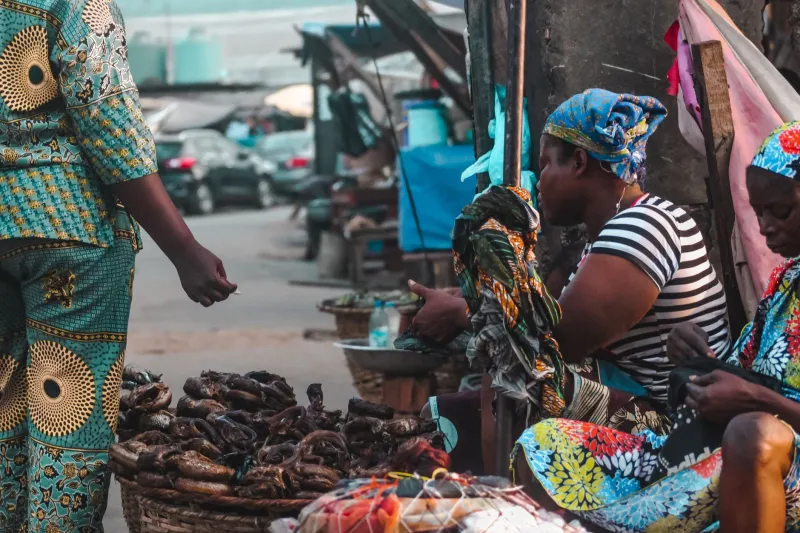
Long before anyone was talking about e-commerce disrupting retail, a quiet revolution was already happening in the group chats. A woman in Houston would post a photo of freshly imported ogiri. Someone in Maryland would reply asking for three packs. Money would change hands via Zelle, a package would arrive two weeks later in a beat-up Priority Mail box, and everybody would be satisfied — no tracking number, no return policy, no receipt.
This is how African communities in America have sourced their goods for generations. Not out of necessity alone, but out of sheer resourcefulness. When mainstream grocery stores didn't carry iru, when Amazon had no idea what uziza leaves were, and when the nearest African market was forty-five minutes away, people figured it out the way they always do — through community.
But "figuring it out" has a ceiling. And that ceiling is exactly what platforms like NaijaMartBay were built to break through.
The Scale of What Was Hidden
Here's the thing most people outside these communities don't realize: the informal African goods trade in the US isn't small. Researchers and economists who study diaspora remittance and trade flows estimate that African immigrant communities in America spend billions of dollars annually on food, beauty products, textiles, and cultural goods tied to their home countries. A significant chunk of that spending has historically flowed through informal channels — personal shoppers, church network vendors, and yes, those legendary WhatsApp groups.
The reasons are straightforward. Formal retail never served this market well. The African population in America is spread across dozens of cities, often in smaller concentrations that don't justify a dedicated brick-and-mortar store. Supply chains from the continent are complicated — import regulations, perishability concerns, inconsistent shipping timelines. And frankly, a lot of vendors simply didn't have the tools or the capital to go legit.
So the shadow economy filled the gap. It worked, mostly. Until it didn't.
When the Hustle Hits Its Limits
Ask anyone who's participated in these informal networks and they'll have a story. The suya spice that never showed up. The palm oil that arrived leaking through the packaging. The seller who went quiet after collecting payment. None of this is unique to African diaspora trade — informal commerce everywhere carries these risks — but it's particularly frustrating when the thing you're trying to buy is a taste of home.
Take Adaeze, a Nigerian-American living in Atlanta who spent years navigating these networks to stock her kitchen. "I loved supporting my people," she says. "But there were times I'd pay someone and just pray. No tracking, no guarantee. You were going off vibes and reputation."
On the seller side, the challenges are equally real. Vendors who built loyal customer bases through word-of-mouth had no way to scale. They couldn't reach buyers outside their immediate social circles. They had no infrastructure for handling volume. And operating informally meant no business credit, no legal protections, and no way to grow into something bigger.
The Digitization of African Commerce
This is where the story gets interesting. The same smartphone penetration and logistics infrastructure that transformed American retail over the past decade is now doing something similar for African diaspora commerce — just with a very specific, very underserved market in mind.
NaijaMartBay was built with exactly this in mind: a dedicated marketplace where African vendors can list their products, set real prices, and reach buyers across the country without relying on someone's cousin knowing someone who knows someone. It's the formalization of what the community was already doing, minus the uncertainty.
For buyers, the shift is significant. You get product photos, descriptions, seller ratings, and actual customer service. For vendors, you get a storefront, visibility, and a platform that understands your product catalog — because not every e-commerce tool knows the difference between egusi and ogbono, or why crayfish needs to be stored a certain way.
Supply Chain: The Real Frontier
If informal networks were the first challenge, supply chain logistics from Africa to the US is the next one — and it's genuinely complex. Importing food products requires navigating FDA regulations, customs declarations, and the ever-present challenge of keeping perishables intact across long-haul shipping routes. Textiles and crafts have their own set of import considerations.
This is why the platforms doing this well aren't just building websites — they're building infrastructure. Partnerships with freight forwarders, relationships with vetted suppliers on the continent, and quality control processes that didn't exist in the WhatsApp-group era. It's unglamorous work, but it's what separates a real marketplace from a digital version of the same old informal hustle.
For NaijaMartBay, the vision has always been bigger than just listing products. It's about creating a pipeline — a reliable, professional, scalable pipeline — between African producers and the African diaspora in America. That means working through the hard logistics problems so that buyers in Columbus, Ohio can order ogiri with the same confidence they'd order anything else online.
More Than Commerce — It's Connection
There's something worth pausing on here that gets lost in all the business talk. These goods aren't just products. They're cultural artifacts. The egusi in your soup is a memory of your grandmother's kitchen. The ankara fabric you're buying for your kid's school cultural day is a statement about identity. The chin-chin you're ordering for a party is a way of saying we don't have to leave this part of ourselves behind just because we moved.
When informal networks served this need, they were doing more than moving goods — they were maintaining cultural ties across oceans. Digital marketplaces like NaijaMartBay are continuing that work, just with better packaging and a return policy.
Adaeze put it simply: "Now I can actually browse. I can discover things I didn't even know I was missing. It feels like a real store that actually gets me."
The Bigger Picture
The legitimization of African diaspora commerce is part of a broader global story about how immigrant communities are using technology to close the gap between where they live and where they're from. It's happening in Latin American communities, South Asian communities, and Southeast Asian communities too. But the African version has its own particular texture — the sheer geographic diversity of the continent, the richness of the product culture, and the size of the diaspora in America all make it a market with enormous, largely untapped potential.
The vendors who once ran their side hustle through a group chat are now building real businesses. The buyers who once placed orders on faith now have receipts. And the cultural goods that once moved through informal channels are finding their way into American homes through something that actually works.
Africa's market, as they say, delivered to your door. For real this time.