Nigeria's Highland Beans Are Quietly Becoming Coffee's Next Origin Story
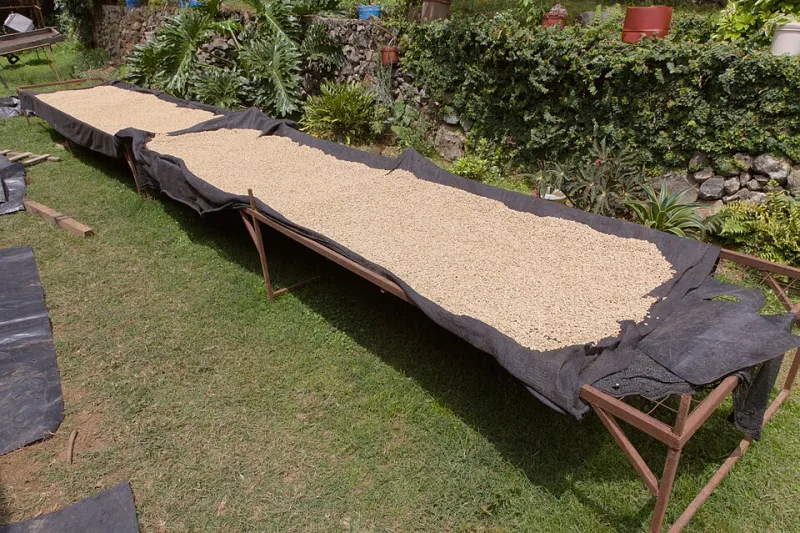
Photo: Harald Ulver, CC BY-SA 4.0, via Wikimedia Commons
Ask a US coffee buyer to name African origins and you will hear Ethiopia, Kenya, Rwanda, maybe Burundi. Nigeria rarely makes the list. That is partly a supply story and partly a reputation story. Nigeria has grown coffee for generations, but much of it has been robusta for domestic use or regional export, not the traceable, cupped, relationship-driven arabica that specialty cafés build menus around. In 2026, that is starting to shift, and the shift is worth paying attention to.
The Coffee Map You Probably Haven't Seen
Nigeria's coffee-growing areas are not a single region. They are pockets: the Mambilla Plateau in Taraba State, parts of Plateau State, the highlands around Jos, and smaller plots in Cross River and other southern highland zones. Altitude, rainfall, and soil vary enough that you can find real differences from one area to the next. Some of the most interesting work is happening with arabica in cooler highland areas, while robusta remains important in lower elevations.
The challenge is that Nigeria's coffee sector has not had the same kind of coordinated quality infrastructure as its more famous East African neighbors. That is changing slowly, through small roasters, agricultural extension projects, and a handful of exporters who are willing to work with very small volumes.
Why US Cafés Are Paying Attention
Specialty coffee is always hunting for the next distinctive origin. Not because Ethiopia and Kenya are tired — they are not — but because café owners want a story that feels new to their customers. A Nigerian coffee with a clean cup profile and a specific farm name gives a roaster something to talk about that most of their competitors cannot match yet.
There is also a diaspora angle. Nigerian communities in the US are large and growing, and a café that stocks a Nigerian single-origin can build a genuine connection with local customers. That is not a marketing gimmick if the coffee is good. It is just good retail.
The Supply Problem Is Real
Here is the part that keeps Nigerian coffee off more US menus: supply is fragmented and hard to predict. Many producers farm small plots, often alongside other crops. Processing can be inconsistent. Drying beds, washing stations, and quality control are not evenly distributed. A roaster who wants 20 bags of a specific lot may find that the lot does not exist in that quantity, or that the paperwork takes longer than the harvest window allows.
Logistics add another layer. Exporting from Nigeria to the US involves freight, documentation, and sometimes delays that are hard to explain to a café owner who needs beans by a certain date. For a small US roaster, the risk of a late or inconsistent shipment can outweigh the appeal of a new origin.
Quality Is Moving in the Right Direction
None of that means the coffee is not worth buying. It means the coffee is still in a build phase. The producers and exporters who are getting traction tend to share a few traits: they cup their lots, they keep lots separate instead of blending everything together, and they invest in basic processing improvements like better drying and sorting. Those are not glamorous changes, but they are the ones that make a coffee repeatable.
US buyers can help by being realistic about volume. A café does not need to launch with a huge program. A small lot on the brew bar, a limited retail bag, a single-origin cold brew — those are achievable entry points. The key is to buy from someone who can tell you the region, the processing method, and the harvest period.
How Marketplaces Close the Distance
This is where online marketplaces can do useful work. A platform like NaijaMartBay is not going to solve Nigerian coffee's infrastructure problems, but it can reduce the distance between a small Nigerian producer and a US buyer who wants to try something new. A well-run marketplace can consolidate shipping, make vendor information visible, and give buyers a way to compare lots without flying to West Africa.
For US café owners, the practical move is to treat Nigerian coffee like any other new origin: ask for samples, cup them blind, and start with a small commitment. For home drinkers, it means looking for roasters who list the region and processing method, not just the country. A bag that says Nigeria is a start. A bag that says Mambilla Plateau, washed, 2026 harvest is a conversation.
What to Ask Before You Buy
The questions are simple. Where was the coffee grown? When was it harvested? How was it processed? Who exported it? If the seller cannot answer those questions, the coffee may still be fine, but you are not buying a traceable origin. You are buying a country name.
Nigeria's coffee scene is not going to replace Ethiopia or Kenya on every menu. It does not need to. It needs to find the buyers who want something specific, who are willing to work with small lots, and who understand that a new origin takes a few seasons to settle in. That is how every coffee region starts. The ones that last are the ones that get curious buyers early.