Skip the Middleman, Keep the Margin: How US Small Businesses Are Going Straight to Nigerian Makers
Photo: Gage Skidmore, CC BY-SA 3.0, via Wikimedia Commons
For a long time, if you were a small business owner in the US trying to stock African goods, you had one real option: find a domestic wholesaler who'd already done the legwork, mark up their already-marked-up prices, and hope the product still felt authentic by the time it hit your shelves. That model worked — sort of. But a new generation of entrepreneurs is tearing up that playbook entirely.
They're going straight to the source.
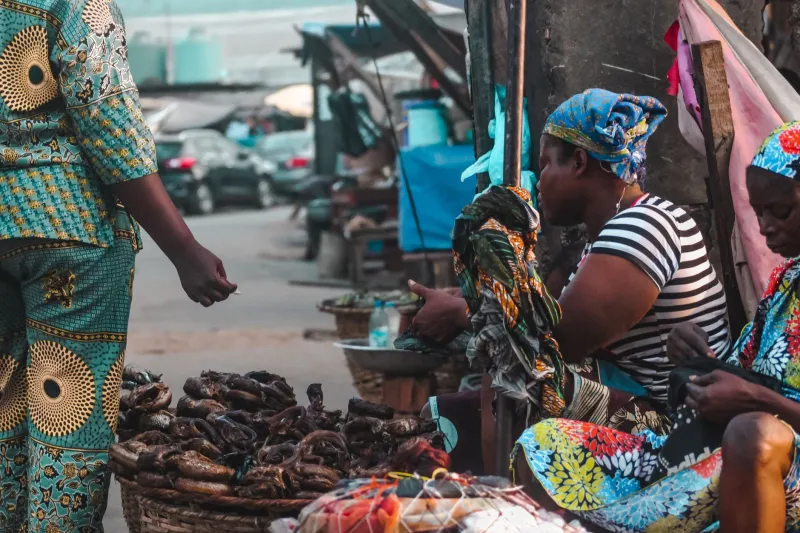
From Brooklyn boutiques stocking handwoven Aso-oke fabric to Atlanta-based food entrepreneurs importing premium ogiri and uziza leaves, American small business owners are quietly building direct supply chains with Nigerian manufacturers, cooperatives, and independent artisans. The results? Fatter margins, genuinely unique products, and business relationships that actually mean something.
Why the Old Model Was Always a Compromise
Let's be honest about what traditional African goods distribution in the US looked like. You'd find a wholesaler — usually based out of a major city with a large African diaspora community — who sourced products in bulk, stored them in a warehouse, and sold them to retailers at a markup that could run anywhere from 40 to 80 percent above what the original producer got paid. By the time a jar of authentic Nigerian shea butter reached a boutique in Austin or Portland, two or three middlemen had already taken their cut.
For the buyer, that meant higher retail prices and thinner margins. For the producer back in Nigeria, it often meant being completely invisible in the transaction — no brand story, no direct feedback, no relationship with the end market. And for the American consumer? They were usually buying something authentic in origin but stripped of any real connection to where it came from.
That disconnect is exactly what a direct-sourcing model fixes.
The Logistics Used to Be the Hard Part
Ask any entrepreneur who tried to source directly from Nigeria five years ago and they'll tell you the same thing: the logistics were a nightmare. International shipping timelines were unpredictable, customs documentation was confusing, and payment transfers to Nigerian suppliers were either expensive, slow, or both.
But things have changed fast. A combination of better international freight options, improved customs filing tools, and the rise of fintech solutions that make cross-border payments between the US and Nigeria dramatically smoother has lowered the barrier significantly. Platforms like NaijaMartBay have stepped into this gap, giving US-based buyers a structured, verified marketplace to connect with Nigerian sellers — without having to cold-email factories or navigate sketchy intermediary networks.
"Before, I didn't even know how to start a conversation with a manufacturer in Lagos," says one natural hair care brand owner based in Houston who now sources raw shea and black soap directly from a women's cooperative in Osun State. "Now I have a real relationship with the people making my products. I know their names. I know their process. That story is worth everything when I'm marketing to my customers."
Quality Control: The Real Conversation Nobody's Having
Here's where it gets real. Direct sourcing sounds great until your first shipment arrives and the product quality isn't what you saw in the sample photos. Quality control is the challenge that separates the entrepreneurs who make direct sourcing work from the ones who give up after one bad experience.
The most successful US buyers have figured out a few non-negotiables. First, samples before bulk orders — always. No exceptions. Second, clear written specifications for every product, including packaging standards, labeling requirements for US customs, and acceptable variation ranges for things like moisture content in food products or dye consistency in textiles. Third, building in a buffer on lead times, because production delays happen and your stateside inventory plan needs to account for that reality.
Some businesses have gone a step further and partnered with third-party inspection services that can do on-the-ground quality checks at Nigerian facilities before a shipment even leaves the country. It adds cost, but for businesses doing significant volume, it's often worth it.
NaijaMartBay's seller verification process also helps here. Knowing that a supplier has been vetted — that their business is real, their products are what they claim, and there's accountability on the platform — takes some of the guesswork out of that initial trust-building phase.
The Margin Math Actually Works
Let's talk numbers, because this is ultimately a business decision.
A typical wholesale distributor in the US might sell a case of premium Nigerian palm oil to a retailer at a price that leaves the retailer with a 25 to 35 percent gross margin at retail. That same product, sourced directly from a Nigerian producer, can yield margins in the 55 to 70 percent range — even after factoring in international shipping, customs duties, and import fees.
The math is similar for artisan goods. A handcrafted leather bag that a Nigerian artisan sells for the equivalent of $30 USD might retail for $120 to $150 in an American boutique. Through a domestic wholesaler, the boutique might pay $65 or $70 for that same bag. Buying direct? You're potentially at $35 to $45 all-in with shipping, which completely changes the economics of the business.
Those margins matter enormously for small businesses operating without the buying power of big retail chains.
The Story Is the Product
Beyond the financials, there's something that's genuinely hard to put a price on: the story.
American consumers — particularly younger, values-driven shoppers — increasingly want to know where their products come from, who made them, and whether that person was fairly compensated. A business that can say "this shea butter was made by a cooperative of 40 women in southwestern Nigeria, and we work with them directly" is selling something fundamentally different from a business that just says "imported shea butter."
That narrative is a marketing asset. It drives social media content, email campaigns, and customer loyalty in ways that generic wholesale sourcing simply can't replicate.
Building for the Long Haul
The entrepreneurs who are getting this right aren't just running one-off import transactions. They're building actual supplier relationships — visiting Nigeria when they can, communicating regularly, placing consistent orders that give their partners predictable revenue, and in some cases co-developing products that are exclusive to their brand.
That kind of relationship takes time to build, but the payoff is a supply chain that's resilient, differentiated, and genuinely rooted in something meaningful. In a market where everyone is fighting for shelf space and consumer attention, that matters.
Platforms like NaijaMartBay exist precisely to make those relationships possible — to be the infrastructure that connects American ambition with African craftsmanship, without all the friction that used to make it feel impossible.
The middleman had a good run. But the future of African goods in the US market looks a lot more direct.